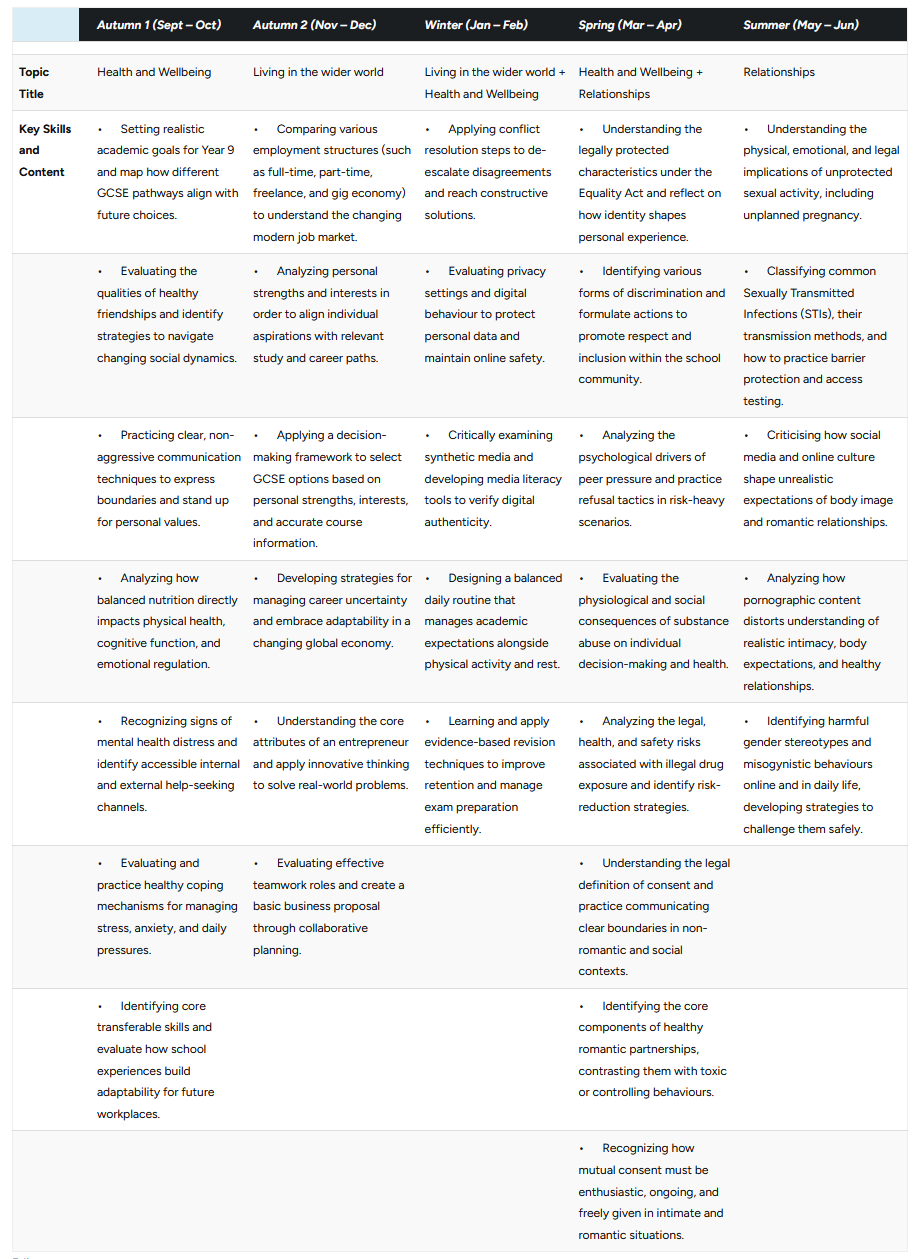
| | | | | | |
| Topic Title | | Health and Wellbeing | Living in the wider world | Living in the wider world + Health and Wellbeing | Health and Wellbeing + Relationships | Relationships |
| Key Skills and Content | | • Setting realistic academic goals for Year 9 and map how different GCSE pathways align with future choices. | • Comparing various employment structures (such as full-time, part-time, freelance, and gig economy) to understand the changing modern job market. | • Applying conflict resolution steps to de-escalate disagreements and reach constructive solutions. | • Understanding the legally protected characteristics under the Equality Act and reflect on how identity shapes personal experience. | • Understanding the physical, emotional, and legal implications of unprotected sexual activity, including unplanned pregnancy. |
| | • Evaluating the qualities of healthy friendships and identify strategies to navigate changing social dynamics. | • Analyzing personal strengths and interests in order to align individual aspirations with relevant study and career paths. | • Evaluating privacy settings and digital behaviour to protect personal data and maintain online safety. | • Identifying various forms of discrimination and formulate actions to promote respect and inclusion within the school community. | • Classifying common Sexually Transmitted Infections (STIs), their transmission methods, and how to practice barrier protection and access testing. |
| | • Practicing clear, non-aggressive communication techniques to express boundaries and stand up for personal values. | • Applying a decision-making framework to select GCSE options based on personal strengths, interests, and accurate course information. | • Critically examining synthetic media and developing media literacy tools to verify digital authenticity. | • Analyzing the psychological drivers of peer pressure and practice refusal tactics in risk-heavy scenarios. | • Criticising how social media and online culture shape unrealistic expectations of body image and romantic relationships. |
| | • Analyzing how balanced nutrition directly impacts physical health, cognitive function, and emotional regulation. | • Developing strategies for managing career uncertainty and embrace adaptability in a changing global economy. | • Designing a balanced daily routine that manages academic expectations alongside physical activity and rest. | • Evaluating the physiological and social consequences of substance abuse on individual decision-making and health. | • Analyzing how pornographic content distorts understanding of realistic intimacy, body expectations, and healthy relationships. |
| | • Recognizing signs of mental health distress and identify accessible internal and external help-seeking channels. | • Understanding the core attributes of an entrepreneur and apply innovative thinking to solve real-world problems. | • Learning and apply evidence-based revision techniques to improve retention and manage exam preparation efficiently. | • Analyzing the legal, health, and safety risks associated with illegal drug exposure and identify risk-reduction strategies. | • Identifying harmful gender stereotypes and misogynistic behaviours online and in daily life, developing strategies to challenge them safely. |
| | • Evaluating and practice healthy coping mechanisms for managing stress, anxiety, and daily pressures. | • Evaluating effective teamwork roles and create a basic business proposal through collaborative planning. | | • Understanding the legal definition of consent and practice communicating clear boundaries in non-romantic and social contexts. | |
| | • Identifying core transferable skills and evaluate how school experiences build adaptability for future workplaces. | | | • Identifying the core components of healthy romantic partnerships, contrasting them with toxic or controlling behaviours. | |
| | | | | • Recognizing how mutual consent must be enthusiastic, ongoing, and freely given in intimate and romantic situations. | |