| | | | | | |
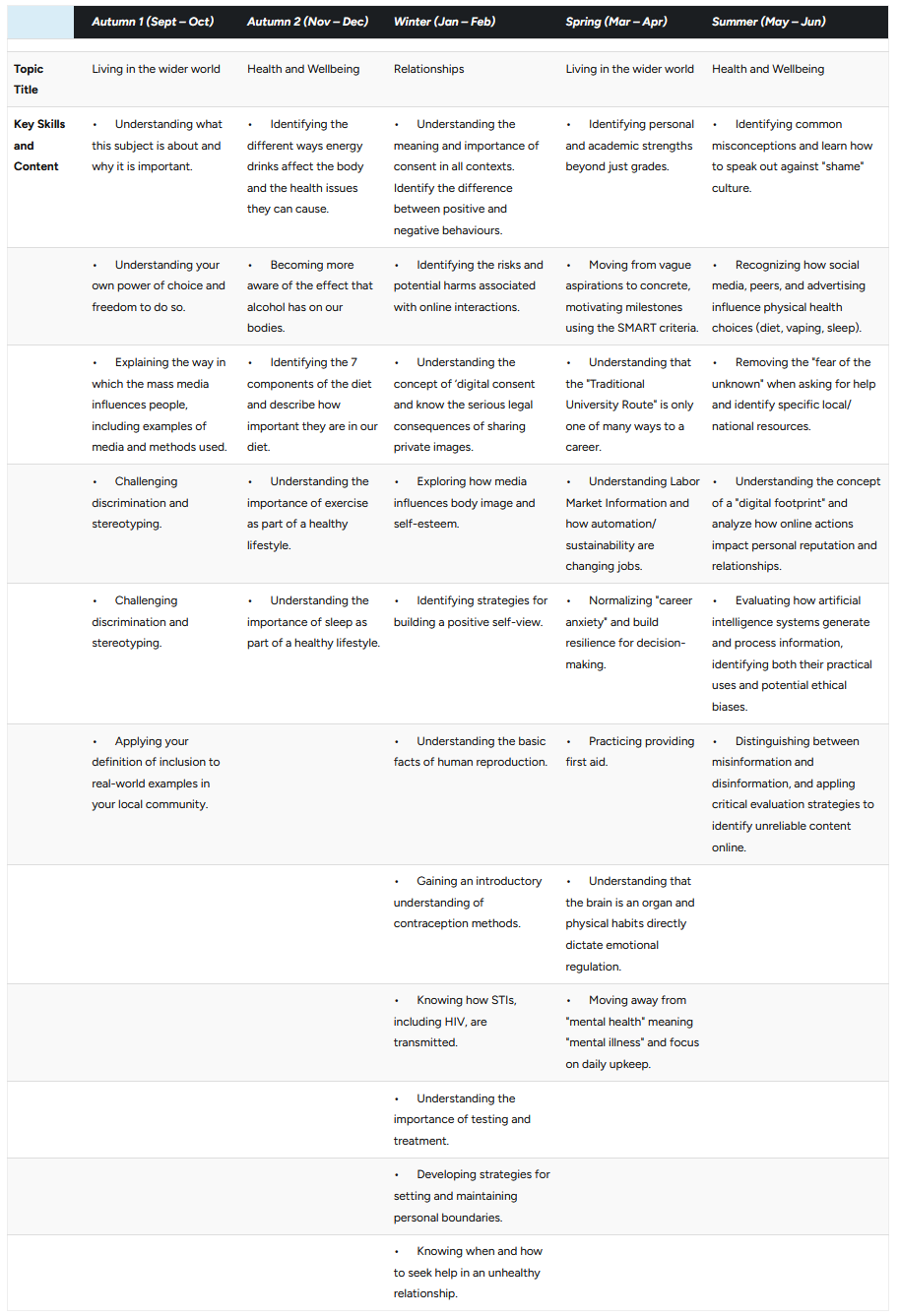
| Topic Title | | Living in the wider world | Health and Wellbeing | Relationships | Living in the wider world | Health and Wellbeing |
| Key Skills and Content | | • Understanding what this subject is about and why it is important. | • Identifying the different ways energy drinks affect the body and the health issues they can cause. | • Understanding the meaning and importance of consent in all contexts. Identify the difference between positive and negative behaviours. | • Identifying personal and academic strengths beyond just grades. | • Identifying common misconceptions and learn how to speak out against "shame" culture. |
| | • Understanding your own power of choice and freedom to do so. | • Becoming more aware of the effect that alcohol has on our bodies. | • Identifying the risks and potential harms associated with online interactions. | • Moving from vague aspirations to concrete, motivating milestones using the SMART criteria. | • Recognizing how social media, peers, and advertising influence physical health choices (diet, vaping, sleep). |
| | • Explaining the way in which the mass media influences people, including examples of media and methods used. | • Identifying the 7 components of the diet and describe how important they are in our diet. | • Understanding the concept of ‘digital consent and know the serious legal consequences of sharing private images. | • Understanding that the "Traditional University Route" is only one of many ways to a career. | • Removing the "fear of the unknown" when asking for help and identify specific local/national resources. |
| | • Challenging discrimination and stereotyping. | • Understanding the importance of exercise as part of a healthy lifestyle. | • Exploring how media influences body image and self-esteem. | • Understanding Labor Market Information and how automation/sustainability are changing jobs. | • Understanding the concept of a "digital footprint" and analyze how online actions impact personal reputation and relationships. |
| | • Challenging discrimination and stereotyping. | • Understanding the importance of sleep as part of a healthy lifestyle. | • Identifying strategies for building a positive self-view. | • Normalizing "career anxiety" and build resilience for decision-making. | • Evaluating how artificial intelligence systems generate and process information, identifying both their practical uses and potential ethical biases. |
| | • Applying your definition of inclusion to real-world examples in your local community. | | • Understanding the basic facts of human reproduction. | • Practicing providing first aid. | • Distinguishing between misinformation and disinformation, and appling critical evaluation strategies to identify unreliable content online. |
| | | | • Gaining an introductory understanding of contraception methods. | • Understanding that the brain is an organ and physical habits directly dictate emotional regulation. | |
| | | | • Knowing how STIs, including HIV, are transmitted. | • Moving away from "mental health" meaning "mental illness" and focus on daily upkeep. | |
| | | | • Understanding the importance of testing and treatment. | | |
| | | | • Developing strategies for setting and maintaining personal boundaries. | | |
| | | | • Knowing when and how to seek help in an unhealthy relationship. | | |